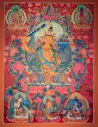


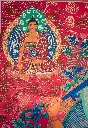
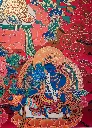
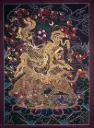
Aparacana Manjushri Thangka – Red Menri – Assembly of Wisdom
Aparacana Manjushri: Transcendent Wisdom and the Flaming Sword
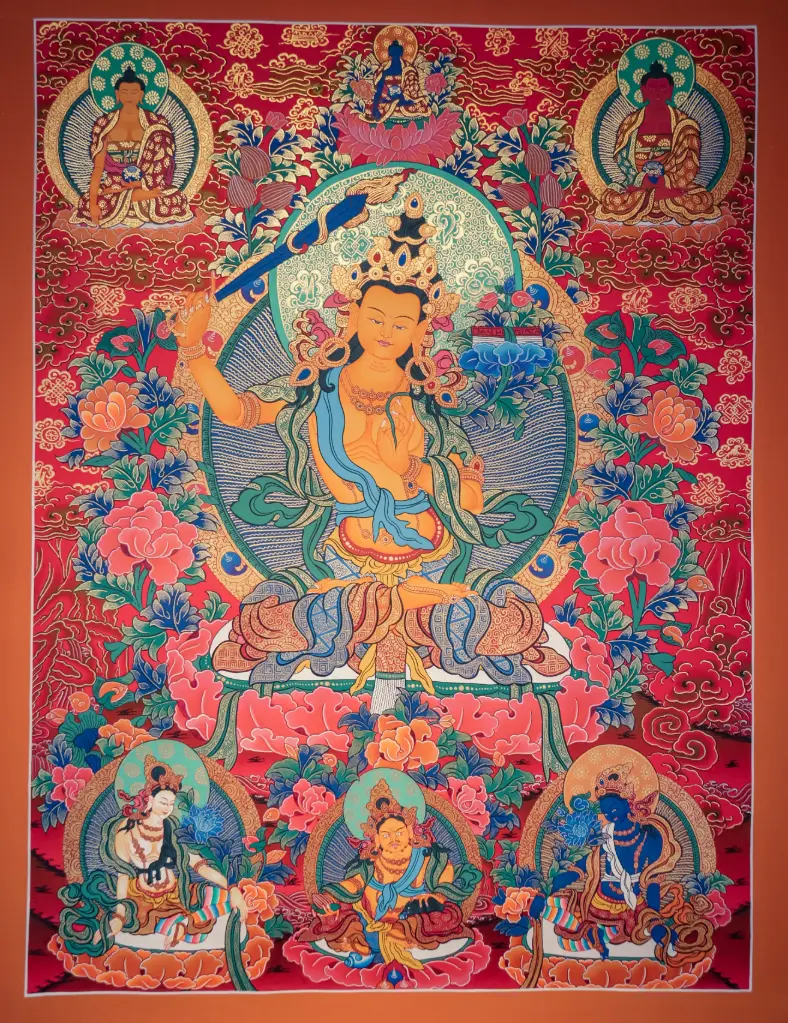
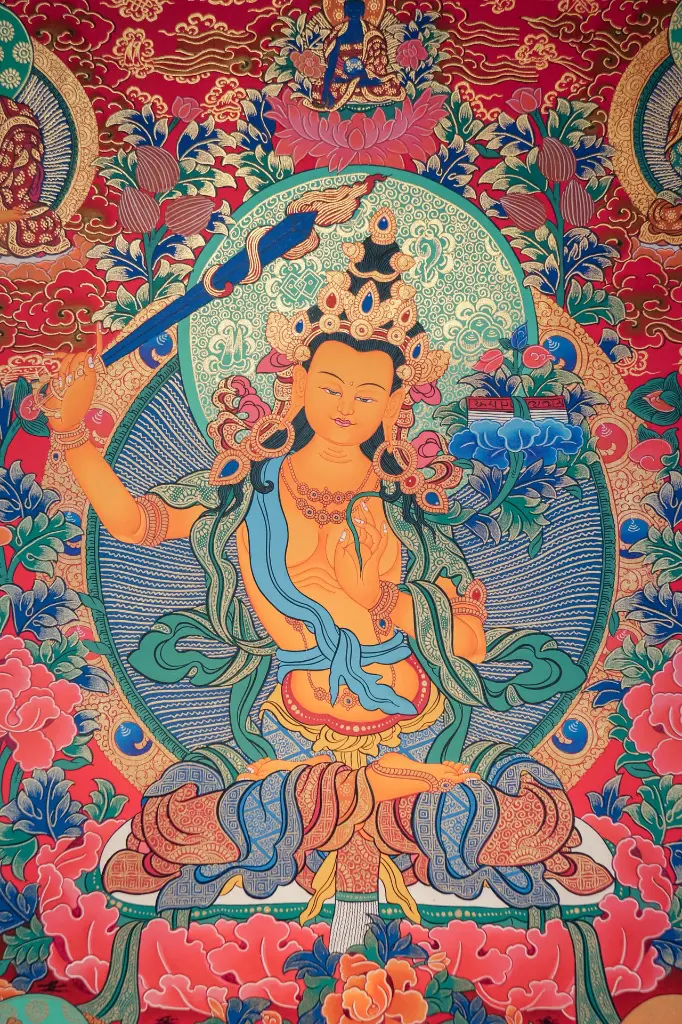
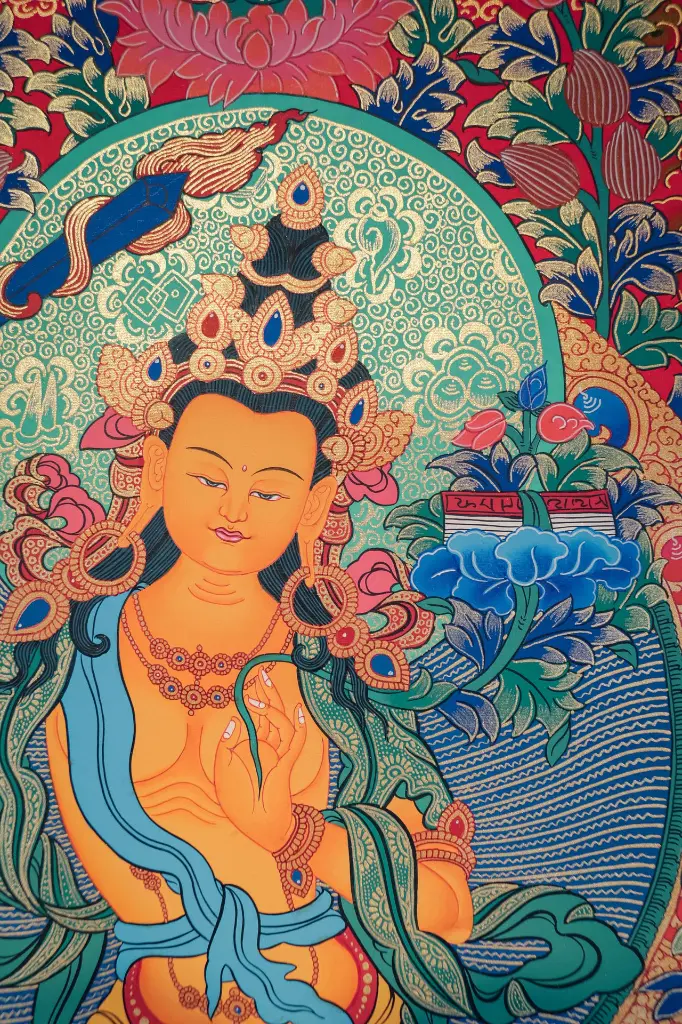
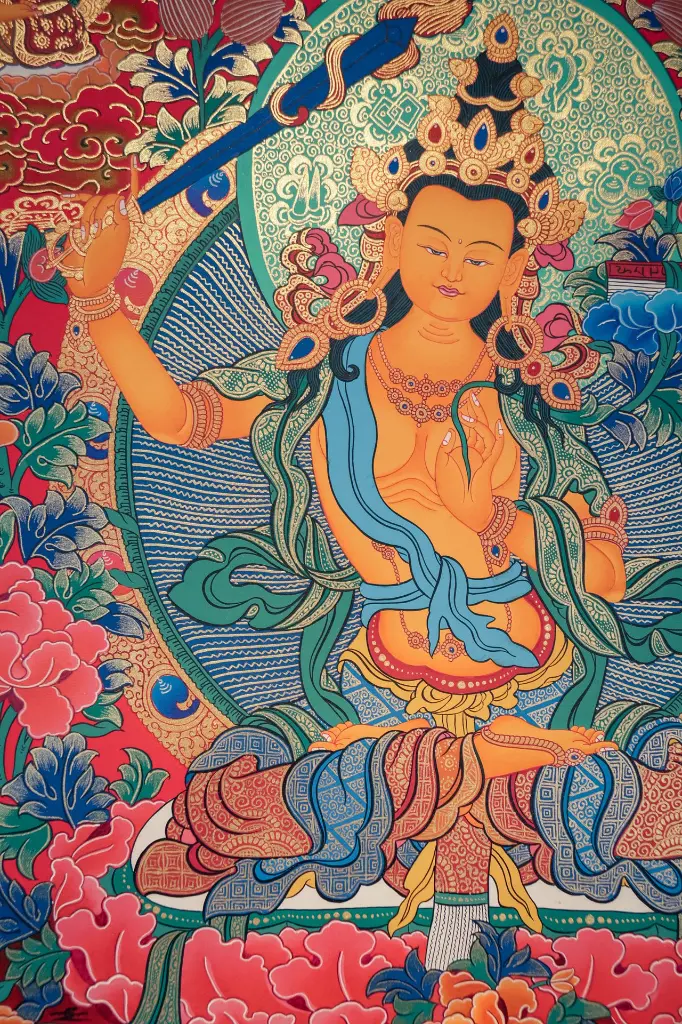
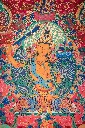
Manjushri sits as the central figure of transcendent wisdom. He holds the flaming sword to cut through ignorance.
This form arises from the Manjushri-Nama-Samgiti (Mañjuśrī-nāma-saṃgīti) text. It represents the realization of the ultimate nature of reality.
Specifications
Dimensions: 60 × 45 cm
Materials: 24K Gold and Pure Mineral Pigments on Cotton Canvas
Origin: Kathmandu, Nepal
Artistic Style: Menri Style Tibetan
Background Type: Serthang Golden Background
Type: Original Hand-Painted
Brocade: Custom Silk Options Available
Consecration: Available Upon Request
Iconography of Manjushri: Transcendent Wisdom and Key Symbol
Manjushri as Perfect Clarity
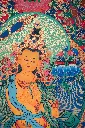
The deity has a youthful appearance and golden complexion. He sits in the vajra posture on a lotus throne.
The raised sword cuts through the root of delusion.
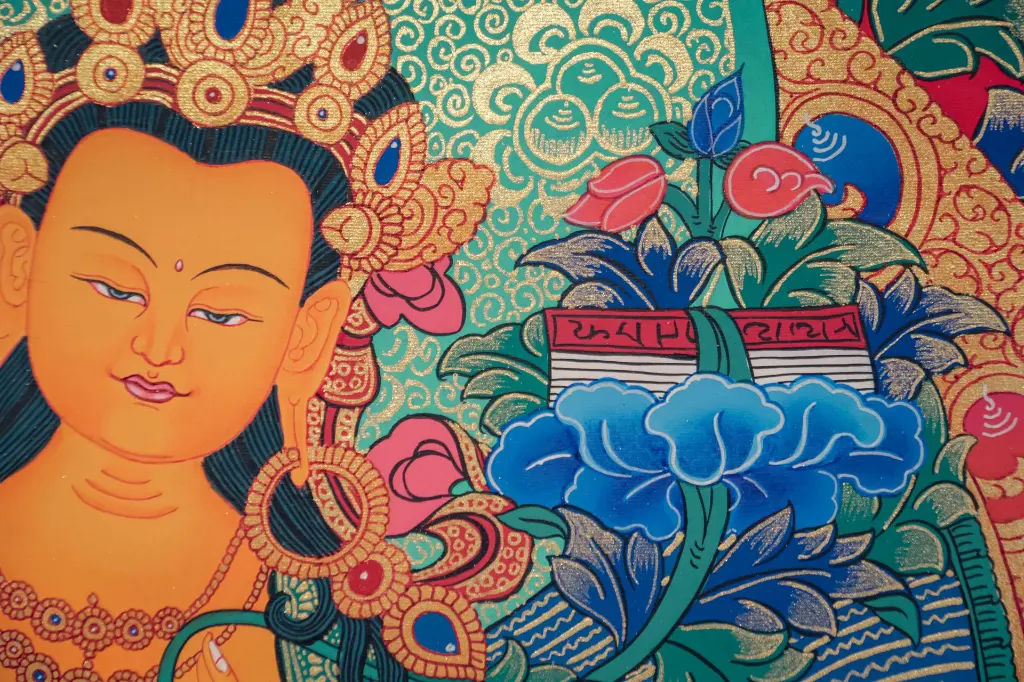
The Prajnaparamita sutra represents the perfection of wisdom.
This form aids students and scholars in their studies. It provides clarity and focus for deep contemplative practice.
The Assembly of Wisdom, Compassion, and Power
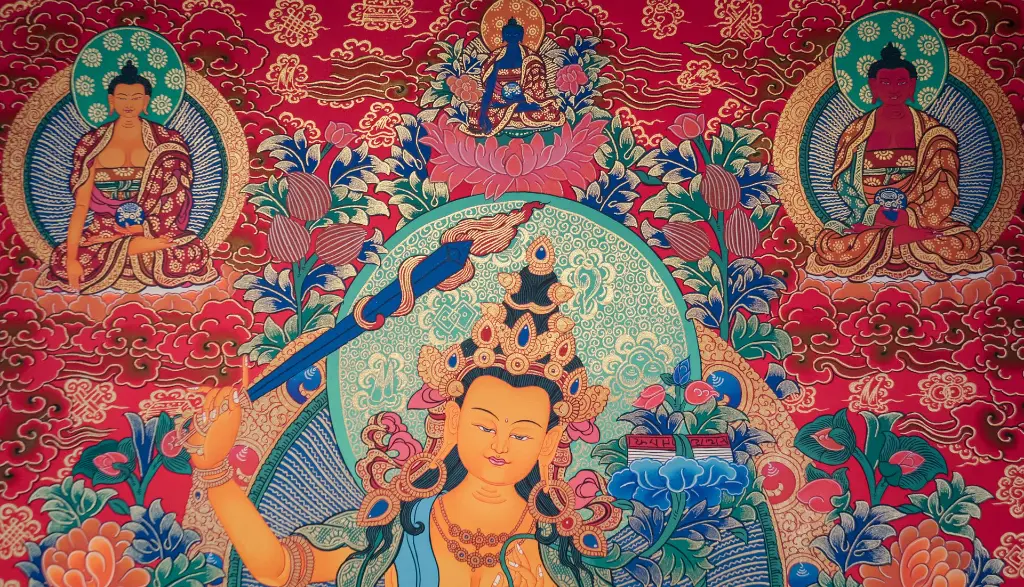
Six enlightened beings surround the central Manjushri figure. They create a complete field of merit and protection.
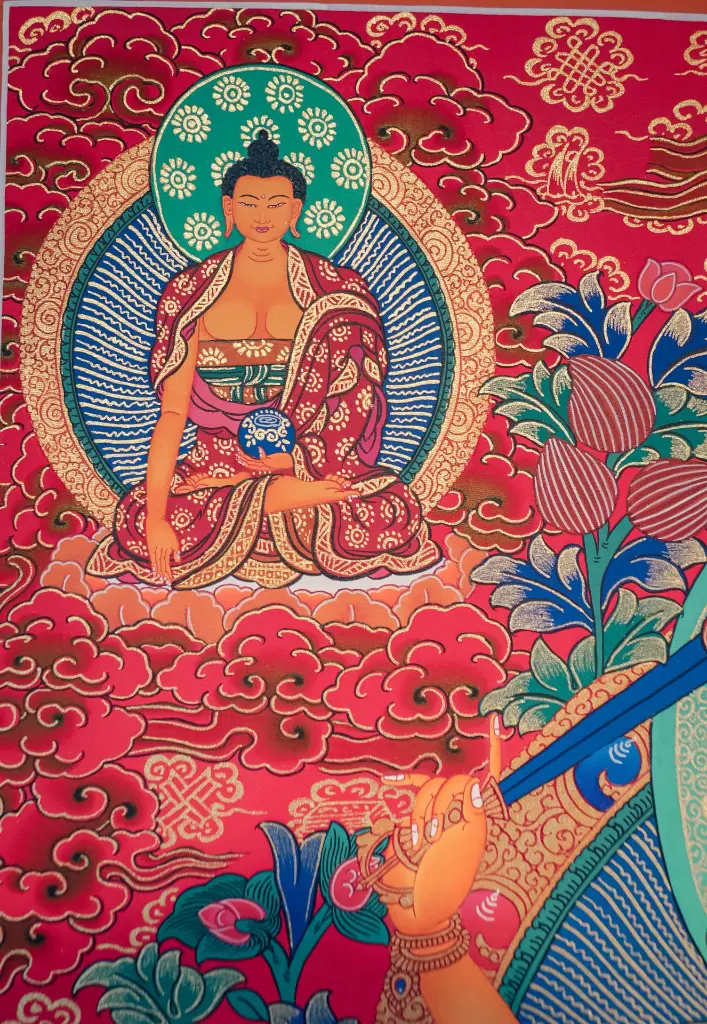
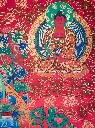
Above: The Three Buddhas
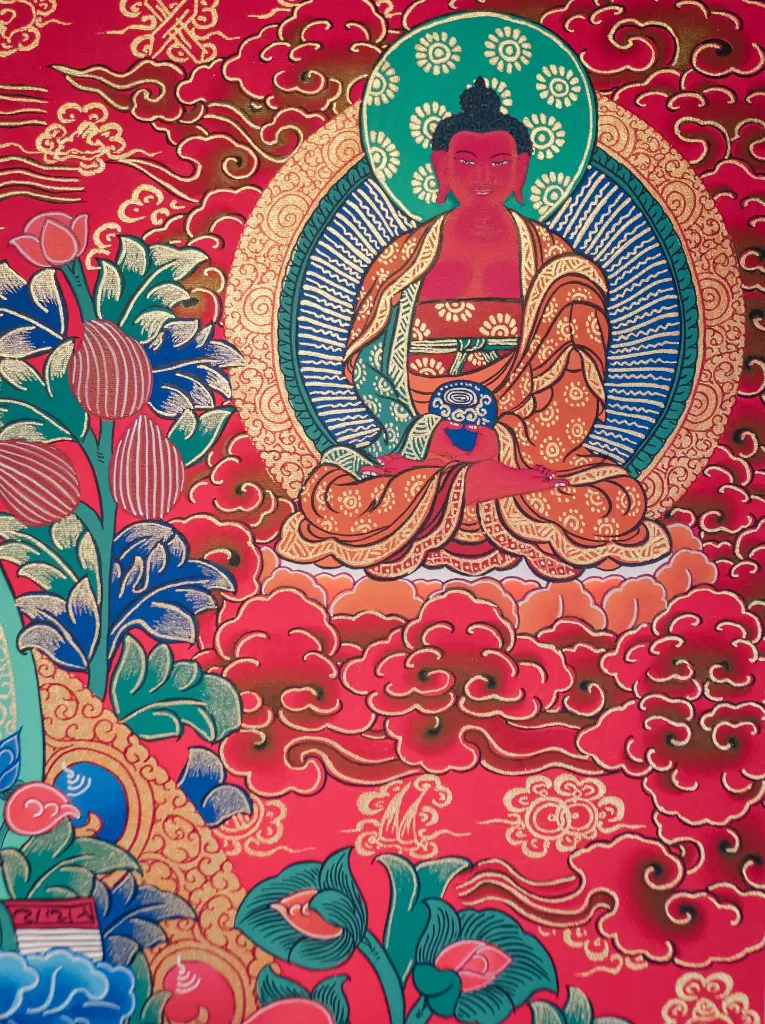
Medicine Buddha occupies the upper middle position for healing. Shakyamuni and Amitabha flank him in the celestial sky.
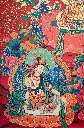
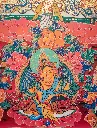
Below: The Protective and Wealth Deities
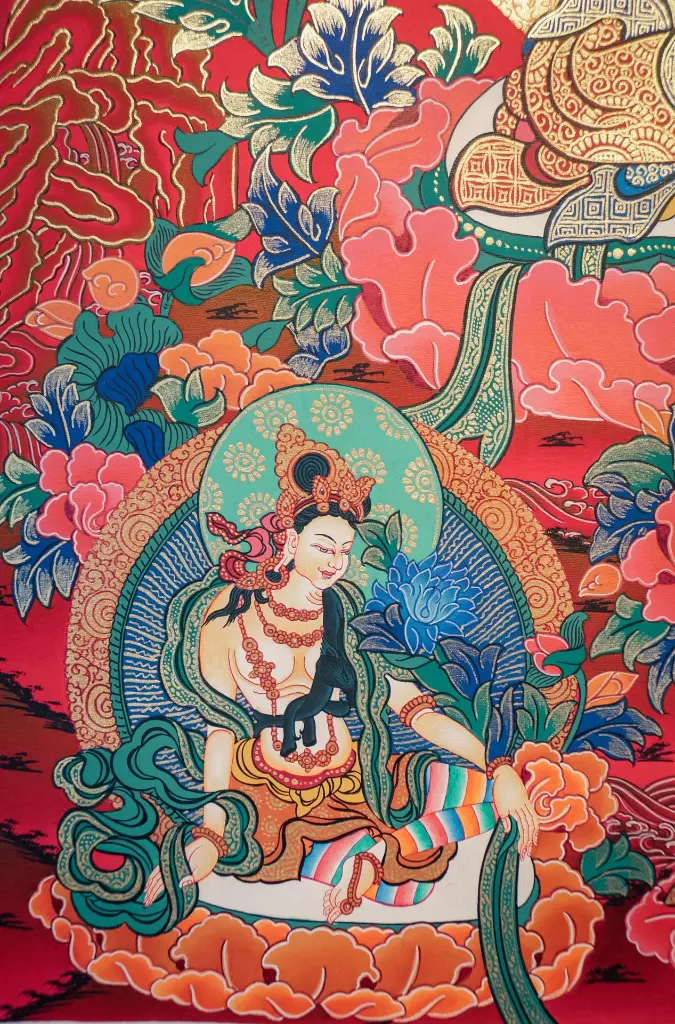
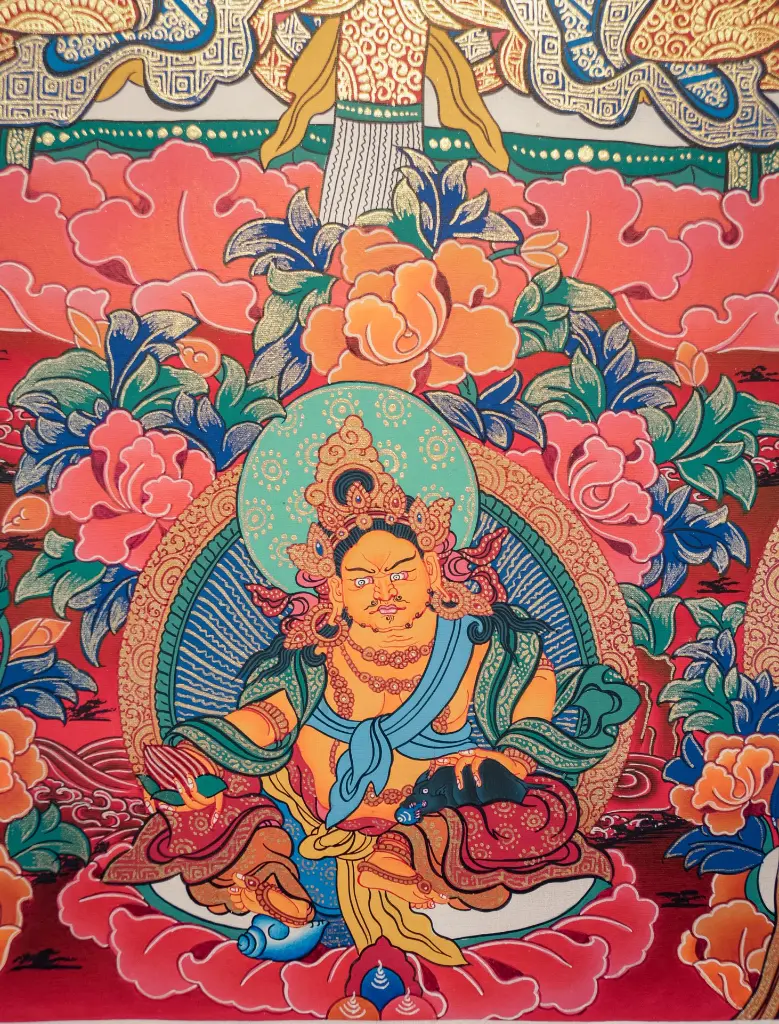
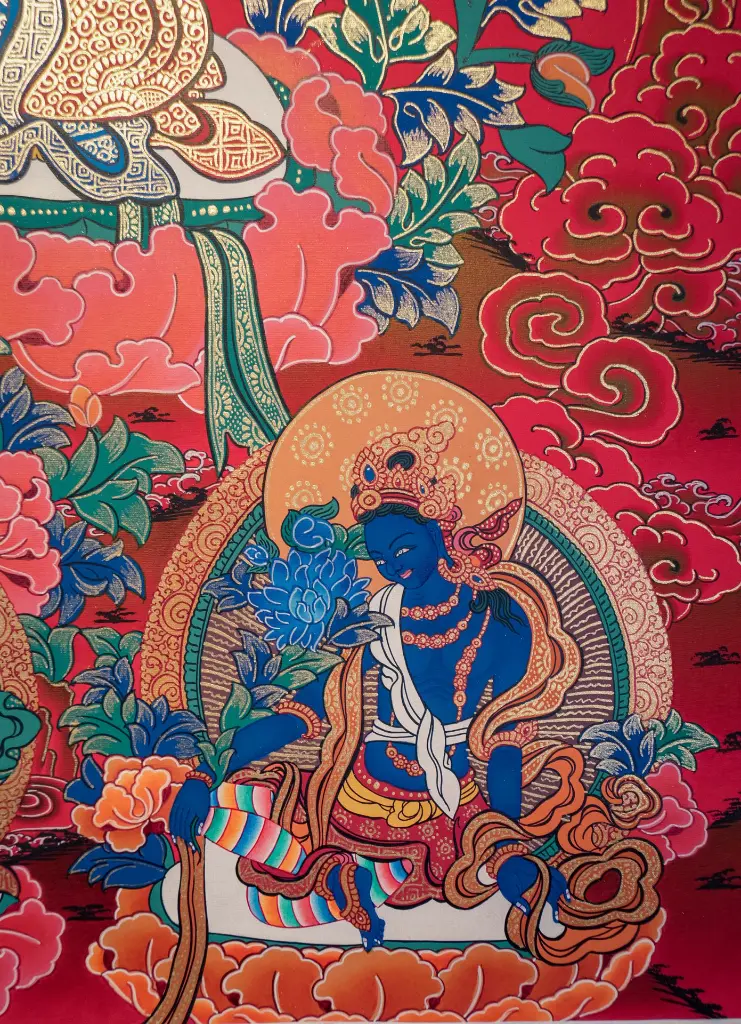
Chenrezig sits at the lower left for infinite compassion. Jambhala and Vajrapani provide wealth and spiritual power.
The harmony of this assembly offers a complete refuge. Every figure supports the central path of enlightened wisdom.
Sacred Setting and Visual Landscape
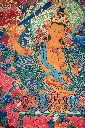
Manjushri rests upon a multi-colored lotus and floral throne. Red terrestrial landscapes provide a rich and grounded atmosphere.
Gold detailing highlights the intricate clouds and sacred aura.
Fine gold line-work defines the complex floral patterns.
The Red Menri style emphasizes the power of the landscape. It connects the celestial figures to the earthly realm.
Lineage and Scriptural Context
This thangka follows the Manjushri-Nama-Samgiti (Mañjuśrī-nāma-saṃgīti) scriptural tradition. It emphasizes the direct realization of non-dual wisdom.
The Menri style preserves the correct iconometric proportions for Manjushri. It aligns with the Sakya and Gelug practice traditions.
These proportions ensure the painting serves as a valid ritual. It connects the practitioner to a long lineage of masters.
Sacred Setting and Heritage
Traditional floral motifs and a golden halo frame the deity. Red and gold pigments create a luminous and sacred effect.
Artists apply 24K gold using the fine hairline technique. Each mineral pigment layer is ground by hand in Nepal.
The iconography adheres to the Mahayana sutras of wisdom. It follows the lineage of the historical Buddha, Shakyamuni.
How to Welcome This Thangka
Mantra: Om A Ra Pa Ca Na Dhih
This thangka supports daily study and analytical meditation practice. It is an ideal gift for students and teachers.
Placement & Interaction:
Hang at eye level in a quiet study space.
Begin mornings with one minute of focused reflection.
This sacred art invites the wisdom of Manjushri.